Different companies. One build.
Intelligent Harvest isn’t one company — it’s a bench of owners, operators, and engineers, each a specialist in the exact thing the system needs — the chip, the water, the ground, the tank, the table — each with decades of doing the hard version for real. Assembled for one job: harvest the heat, feed the town.
“I believe AI is one of the most genuinely useful advances of our era — and I love this planet. For a long time those two things felt at war. Intelligent Harvest is the peace I went looking for, couldn’t find, and decided to build.” Andrew Potter, Founder & CEO · thematchlightgroup.com

Andrew Potter
A multiple-time founder, Andrew runs The Matchlight Group, a branding, marketing, and design firm in Lynchburg. A communicator and performer by training, his job here isn’t the thermodynamics — it’s the people part: turning a proven engineering idea into something a town can see, trust, and verify, and bringing the right operators, team, and engineers to the table to build it.
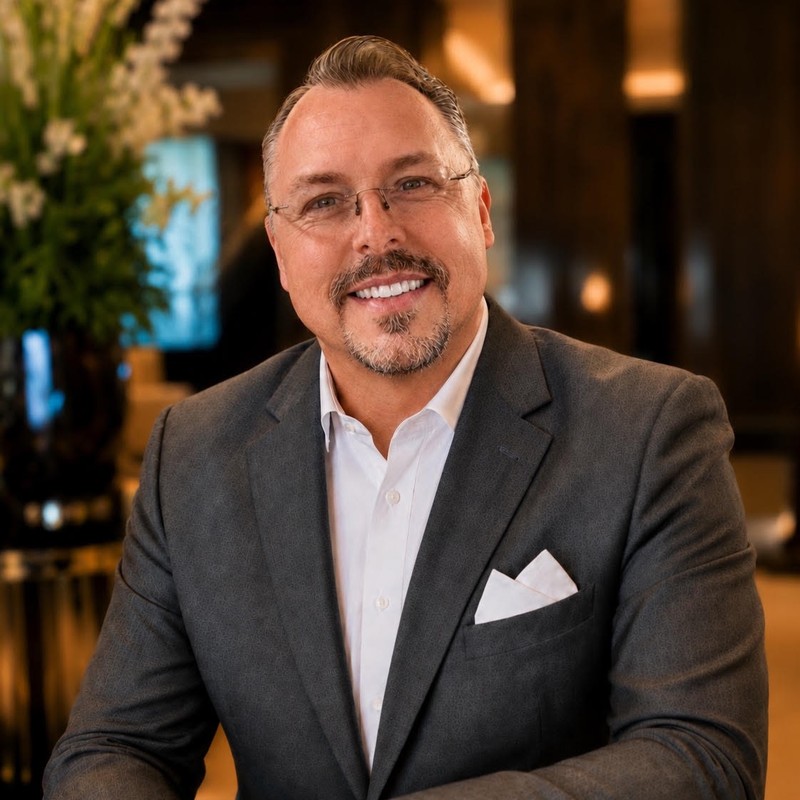
Dr. Curtis Breville
A leading expert in AI data-center liquid cooling, sustainability, and waste-heat reuse, Curtis has spent more than three decades advising hyperscalers, enterprises, manufacturers, and communities on resilient, high-performance cooling for next-generation AI infrastructure. As founder of IPE Solutions and creator of the Foundational Liquid Cooling Certification — the industry’s first — he’s shaping the future of sustainable data centers by advancing education, reducing operational risk, and turning waste heat into valuable community resources. That last phrase is Intelligent Harvest’s entire thesis, and the place where it begins — heat captured at the chip — is Curtis’s home turf.

Ed Lohrenz
Ed has designed ground-source and district thermal systems since 1982 — over 30,000 tons (105 MW) of capacity, from a town-owned district geothermal utility in Gibsons, British Columbia to some thirty geothermal ice arenas across North America, with projects reaching from the Australian outback to the Siberian tundra. He wrote the Certified GeoExchange Designer curriculum adopted by IGSHPA and has trained designers from more than twenty countries. Moving a data center’s heat into the ground, holding it, and handing it to a greenhouse on demand is precisely the math Ed has spent a career teaching everyone else.
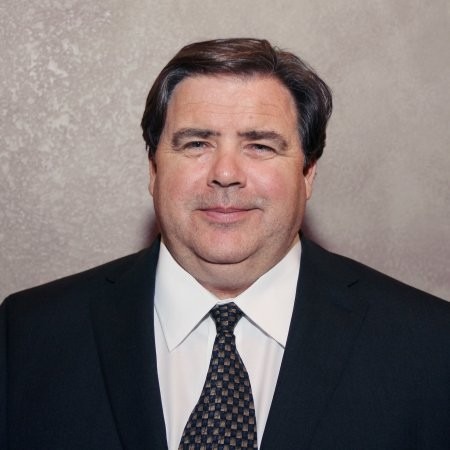
Jim Phene
Jim has spent his career on both kinds of water this system runs on. He started in 1982 on sensors and automated water control, went on to manage crop-management technology at Netafim — the name in drip irrigation — and then protected cooling systems for LAKOS, on some of the largest district-cooling projects in the world, along with data centers, steel plants, and major airports across the Middle East, South Asia, and Africa. Before any of it, he flew for the U.S. Air Force. Today, as President of Epiphene in Clovis, California, he removes the microscopic particles that scale and foul heat exchangers, and water runs in the family: his father, Dr. Claude J. Phene, was a pioneering USDA irrigation scientist. A cooling loop and a drip line are the only two water systems in the whole model, and Jim has spent forty years on both.
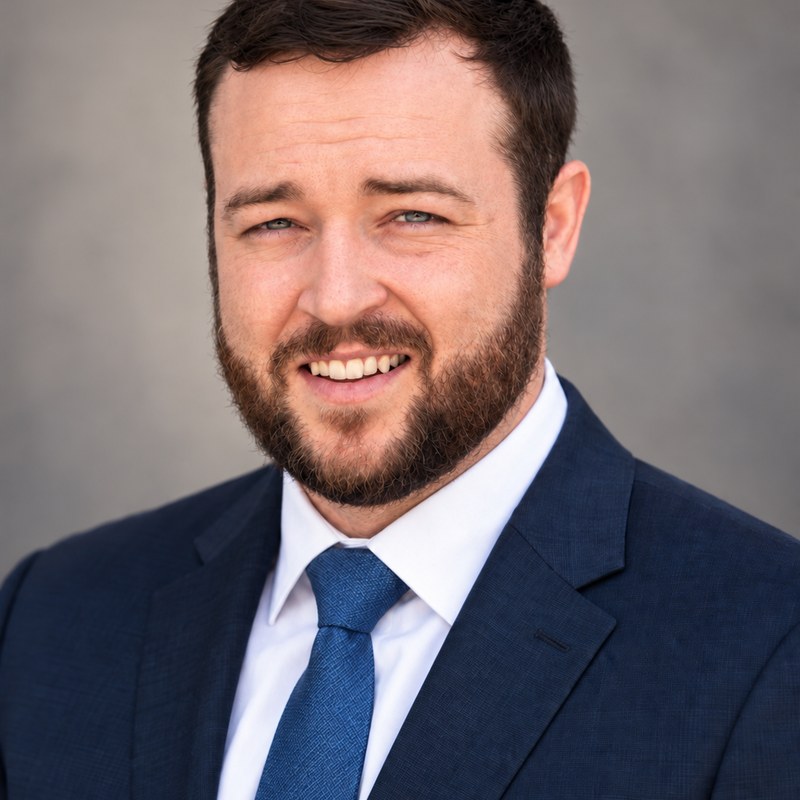
Zack Perry
Zack has grown food inside nearly every kind of controlled environment the industry has built — most recently as Head Grower at 80 Acres Farms’ flagship vertical farm in Hamilton, Ohio, before that as Production Manager helping launch two generations of Square Roots indoor farms, and earlier as an Assistant Grower in AppHarvest’s commercial greenhouse. His roots are in aquaponics: a Kentucky State degree focused on aquaculture, a nonprofit farm in Lexington that paired food production with community food access, and an interim farm-manager post in rural southern Egypt. He started out as a greenhouse construction foreman, so he has lived the whole lifecycle — build, commission, start up, run, improve. As Director of Agricultural Operations for Intelligent Farms, Zack owns what happens inside the glass: the crops, the controls, and the teams that turn a data center’s heat into a harvest.

Hannah Mather
Hannah’s work has taken her from research labs and test fields to greenhouses and advanced controlled environments, with experience spanning plant breeding, crop physiology, and agricultural product innovation. With a master’s in horticulture from the University of Florida, she has led multidisciplinary research that ties the science to the problems growers actually face. Most recently, at 80 Acres Farms, she led multimillion-dollar R&D programs that joined research, farm operations, and commercial strategy — developing new products, improving production systems, and guiding business decisions with data. Having lived across the United States and Canada, she learned early that communities differ, but people everywhere need to eat, and food brings them together. As Director of Crop Research & Development, Hannah decides what grows under the glass and how to grow it best: choosing the crops, tuning the growing environment, and finding the data-driven answers that help a data center’s heat become the most food it can.
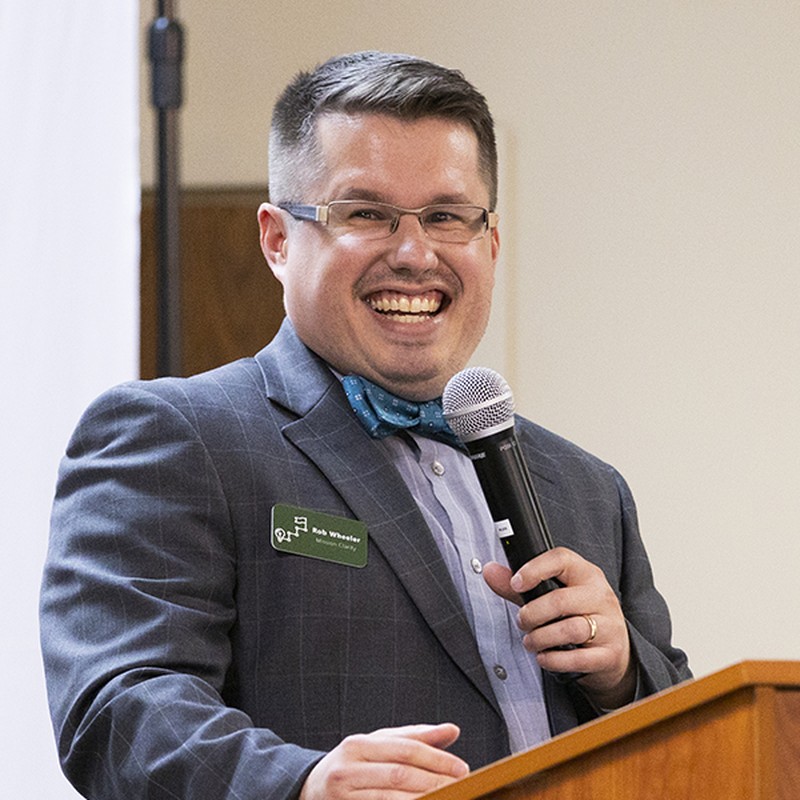
Rob Wheeler
Founder of Mission Clarity, Rob helps organizations do exactly what the name promises — get honest about who they serve and why, then build the day-to-day operations that actually deliver it. As Chief Operating Officer of Intelligent Farms, he holds the seat where this whole system’s promise is kept: the operating entity that runs each greenhouse on non-profit logic and returns its surplus to the community it feeds. Everyone else on this page moves heat, water, ground, steel, or crops. Rob’s job is what happens after the engineering works — making sure the food this system grows lands on the tables it was grown for. The founder tells the story; the operator is the one who makes it true.
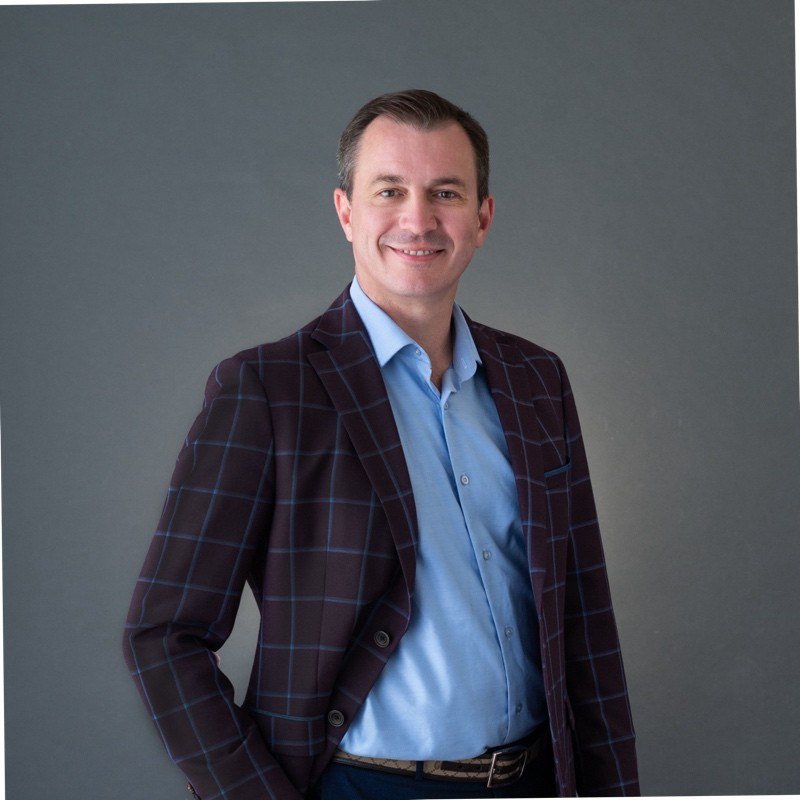
Dallas Rush
Founder and CEO of Rush Holdings and the force behind Wolf Machinery & Supply — maker of the Gladiator line of horizontal-directional-drilling rigs — Dallas has spent his career moving energy and utilities through ground others can’t. A sealed heat loop from a server hall to a greenhouse is, underneath it all, a trenchless-drilling and energy-systems problem. Beyond the rigs, he sits on multiple energy boards and works on cleaner-earth technology — clean combustion and clean water. He brings the rigs, the crews, and the thermal know-how to put a town’s heat exactly where it needs to go.
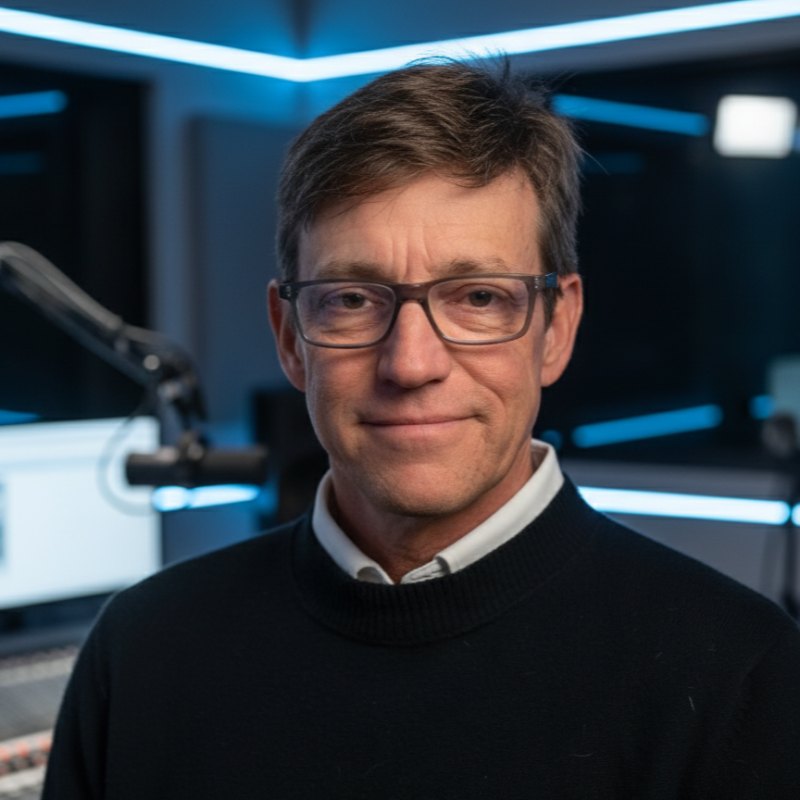
Cole Candler
Founder and President of Gas Station Supply — the Mid-Atlantic’s regional leader for “tanks on the ground,” with 83 product lines and certified crews to set and service them. He’s been in petroleum equipment since he graduated James Madison in 1986, with roots that run deeper still: his family founded Candler Oil, a Lynchburg fuel-and-heating company, back in 1968. The buffer tank that holds a data center’s reclaimed warmth until the greenhouse calls for it is exactly the kind of system Cole’s teams have specified, set, and serviced for decades — right here in our own backyard.